

Across Southeast Asia, the coconut is part of everyday life. It appears in food, drinks, traditional products and, increasingly, wellness and personal care goods.
But in Solol Village in Raja Ampat, Indonesia, the familiar crop is taking on another role. Through coconut value-added products, local residents are learning how an existing natural resource can support income, skills and more sustainable livelihoods.
The change is modest in scale. Its impact, however, offers a useful example of how rural communities can create more value without abandoning resources and knowledge they already have.
Finding More Value in an Existing Resource
Solol Village sits in West Salawati District, Raja Ampat Regency. Families have maintained small coconut groves around their homes, beaches and mangrove areas for generations.
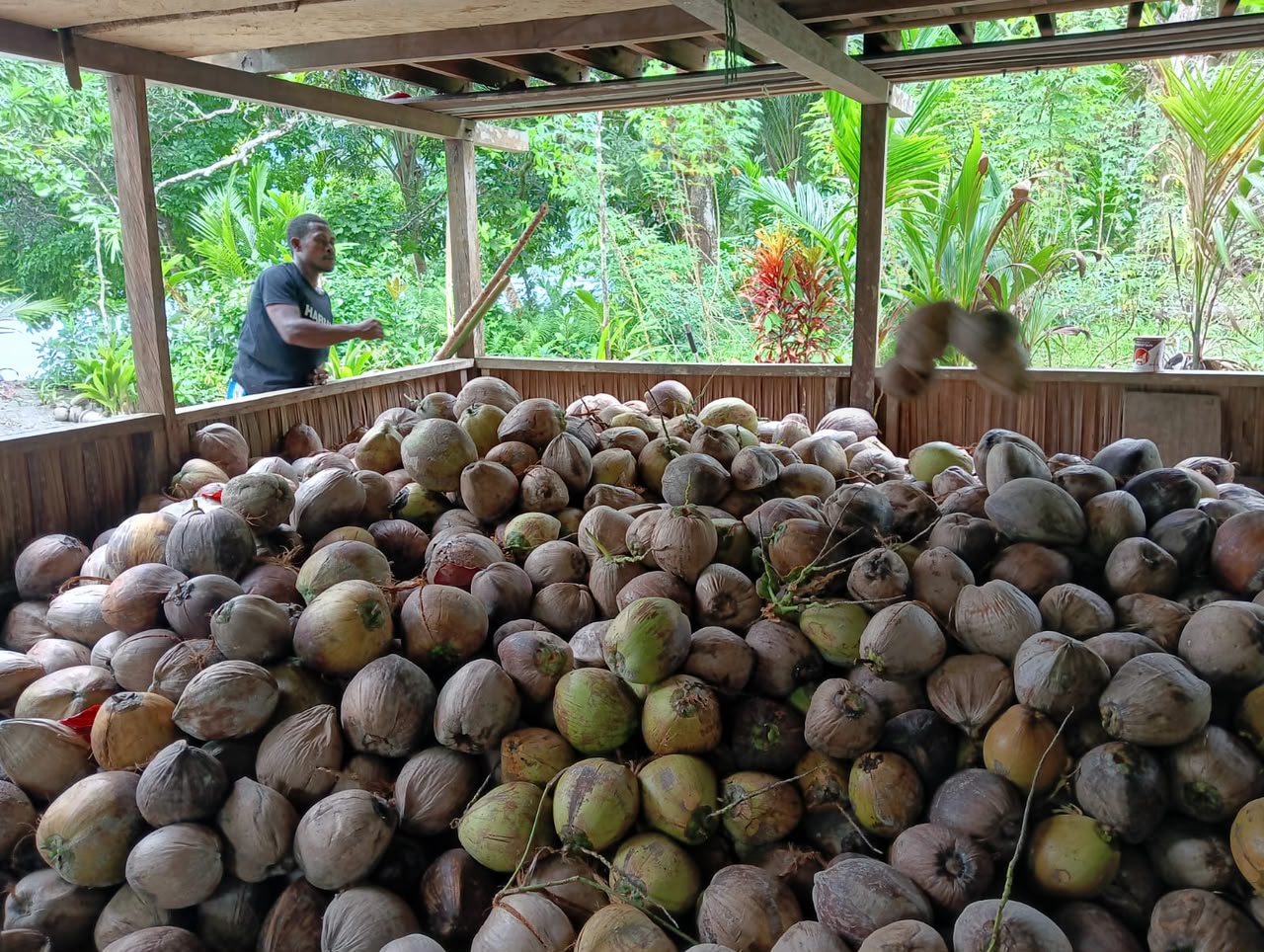
For years, many coconuts were consumed locally or sold as raw produce. According to the community, an individual coconut typically fetched between Rp1,000 and Rp3,000, depending on market conditions.
That left limited economic value for growers.
The community also faced a longer-term concern. Without replanting and better management, coconut resources could gradually decline.
“These coconuts are a legacy from our parents. We guard them, we plant them again, and we process them slowly,” said Philipus Charles Fiataly, a village official and chairman of the Church Youth Fellowship, or PAM.
Youth Skills Help Create Higher-Value Coconut Products
A shift began after Bentara Papua established the Solol Station as a learning hub following a local potential assessment in Raja Ampat in 2019.
Through the Merdesa Village School, known as SEKAM, young residents received practical training in natural resource management and product development. One area of focus was virgin coconut oil, or VCO.
“We start with what is already there,” said Grison Krey, Solol Station Coordinator for Bentara Papua. “The coconuts are already present; it is just a matter of how to process them so they have added value and quality acceptable to the market.”
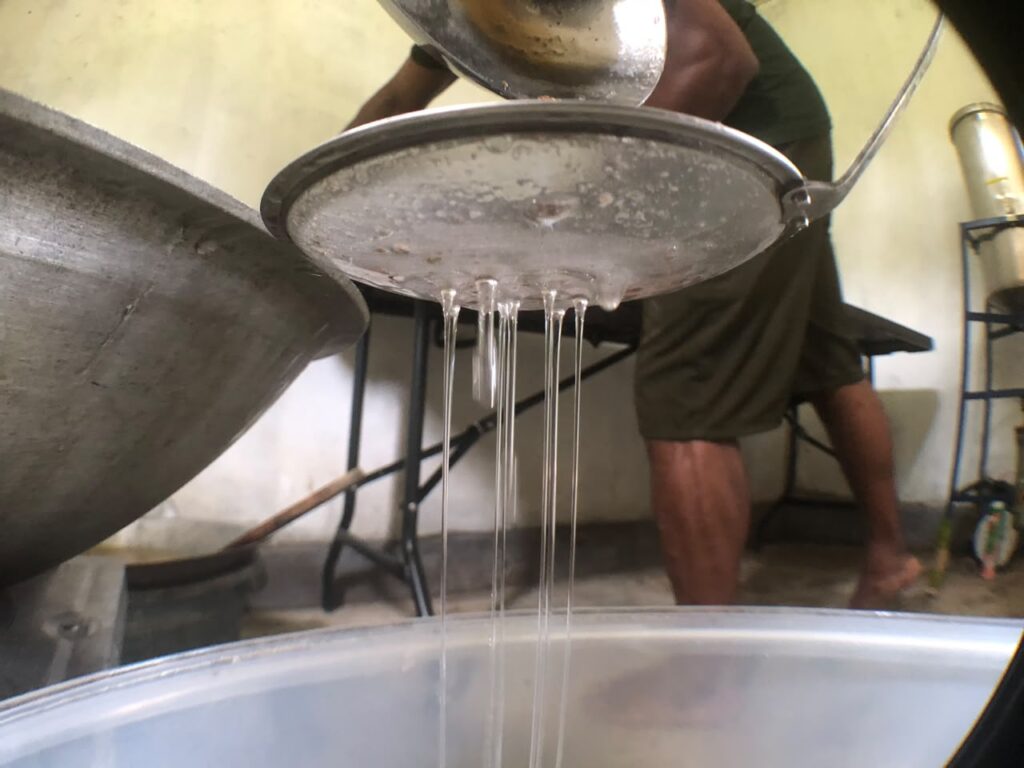
Residents now produce VCO collectively in relatively small batches. Around 10 to 30 selected coconuts are used in each production cycle.
The process includes grating, squeezing, fermentation and filtration. Coconut maturity is also checked to maintain product quality.
For Philipus, the bigger change has been knowledge. Community members who once produced only conventional coconut oil have now taken part in testing production methods and developing standard procedures for VCO.
A Small Product With Greater Economic Value
Turning raw coconuts into finished products has opened a different value proposition.
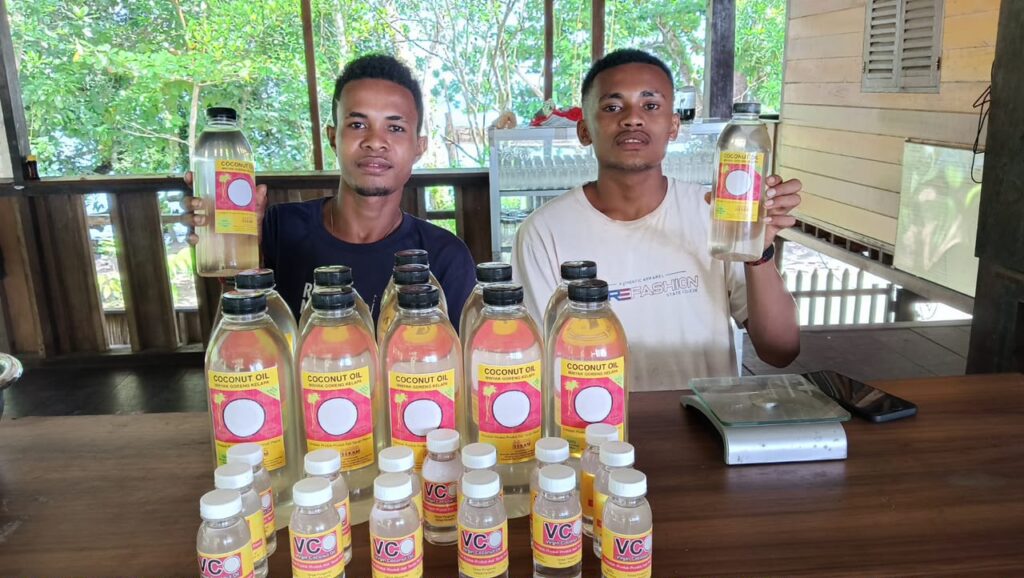
In Solol, VCO is sold at about Rp40,000 (RM9.80) for 100ml and Rp100,000 (RM23.20) for 250ml. Regular coconut oil, by comparison, sells for around Rp25,000 to Rp30,000 (RM5.80 to RM6.96).
The products have reached buyers through district exhibitions, resorts and international visitors.
Market access is still far from straightforward. Solol’s island location means transport and weather can disrupt deliveries, making regular supply difficult.
Rather than expanding production too quickly, the community is keeping output within its capacity. This helps protect quality while residents develop their skills and explore demand.
Using More of Every Coconut
The effort goes beyond VCO.
Residents are also looking at ways to use coconut by-products. Shells can become decorative items, while husks are used for smoking fish. Residue from VCO production is being explored for uses such as animal feed and briquettes.
This approach can reduce waste while creating additional value from the same crop.
It also connects income generation with resource management. Instead of simply harvesting more coconuts, the community is learning how to earn more from what it already produces.
Why Solol’s Experience Matters Beyond Raja Ampat
Solol’s experience reflects a wider development opportunity for rural communities across Southeast Asia.
Local resources do not always need large factories or complex technology to generate greater value. Skills training, better processing, quality control and access to markets can sometimes make the difference.
For young people, programmes such as SEKAM can also create practical reasons to participate in the local economy. They learn production and resource-management skills while working with products rooted in their own communities.
The model remains small, and challenges around logistics and market access remain. Yet it shows how community development can begin with familiar resources.
For Solol, the coconut is no longer simply something to harvest and sell. It is becoming a way to build skills, create income and protect a resource that has supported families for generations.
FAQs
What coconut products are being produced in Solol Village?
The community produces virgin coconut oil while exploring other uses for coconut shells, husks and VCO residue.
How do coconut value-added products benefit the community?
Processing coconuts locally can increase their economic value while helping residents build practical production and resource-management skills.
What is SEKAM?
The Merdesa Village School, or SEKAM, is a Bentara Papua initiative that helps young people develop practical skills for managing local natural resources independently and sustainably.